
Card #100 · Invertebrates
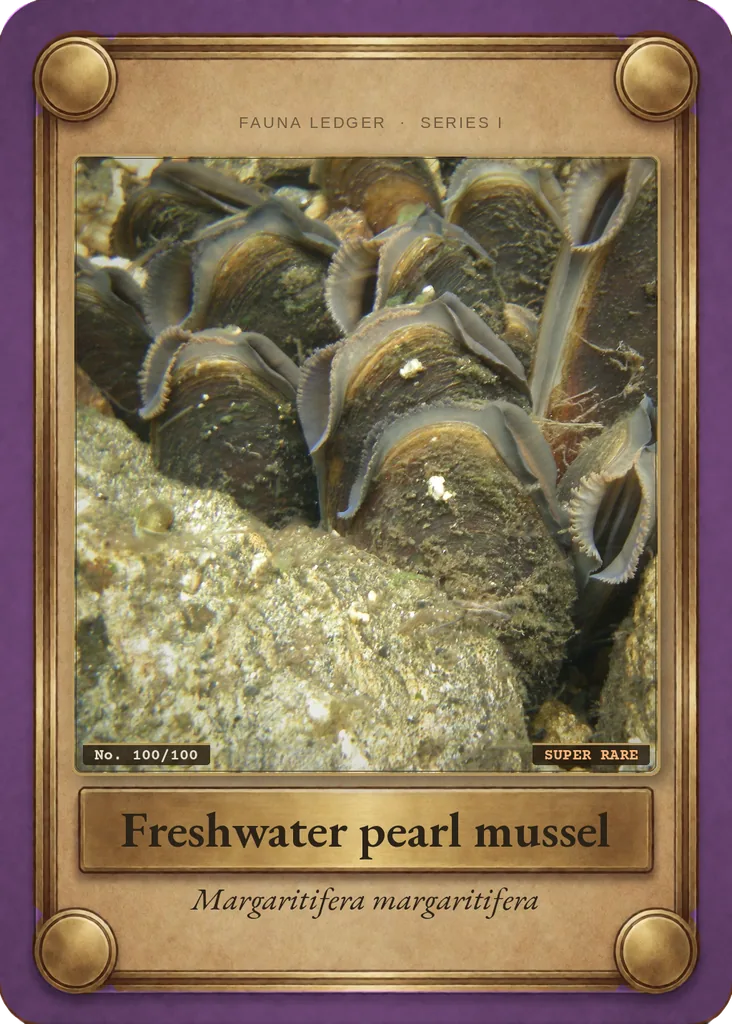
Freshwater pearl mussel
Margaritifera margaritifera
Super Rare EN · Endangered
Field notes
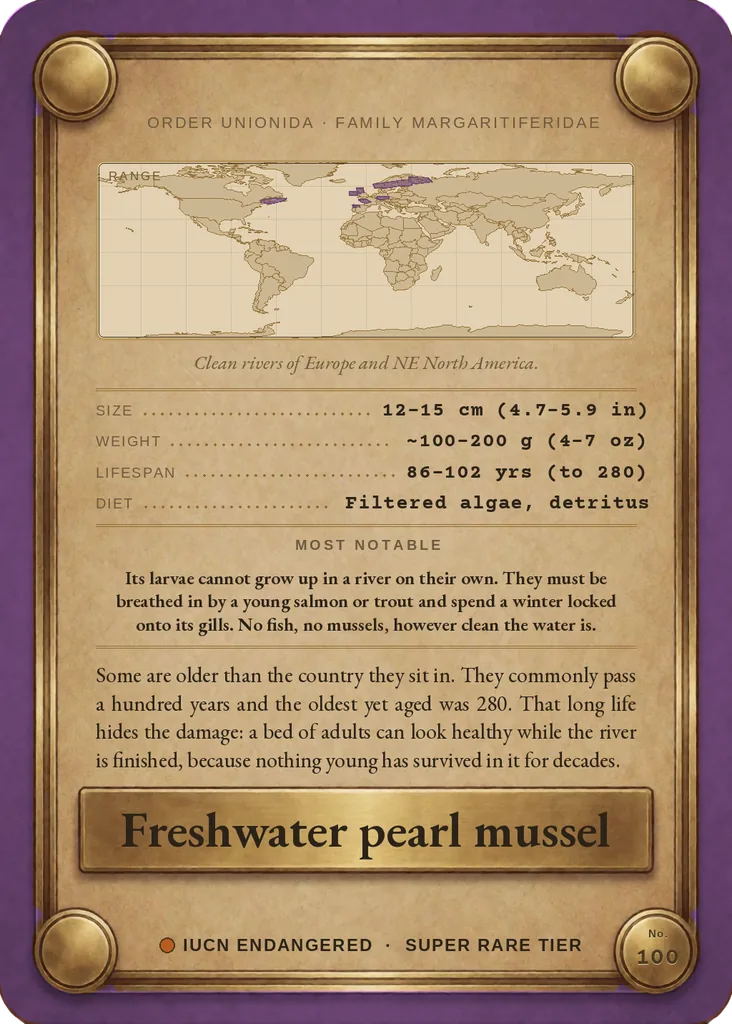
- Classification
- Order Unionida · Family Margaritiferidae
- Range
- Clean rivers of Europe and northeastern North America
- Size
- 12–15 cm (4.7–5.9 in)
- Weight
- ~100–200 g (4–7 oz)
- Lifespan
- 86–102 yrs (to 280)
- Diet
- Filtered algae, detritus
Most Notable
Its larvae cannot grow up in a river on their own. They must be breathed in by a young salmon or trout and spend a winter locked onto its gills. No fish, no mussels, however clean the water is.
Some are older than the country they sit in. They commonly pass a hundred years and the oldest yet aged was 280. That long life hides the damage: a bed of adults can look healthy while the river is finished, because nothing young has survived in it for decades.
One mussel filters something like 50 litres of river water a day. A good bed of them is the reason the water above it runs clear, which is why losing them changes a whole river and not just one species in it.
A female releases on the order of 200 million larvae in her life. Almost every one of them dies. The few that are inhaled by a passing salmon or trout ride out the winter on its gills, drop off into the gravel in spring, and then spend five years buried in it before they are ever seen.
The name is literal. These were fished for pearls for centuries across Scotland, Ireland, Scandinavia and Bavaria, and the pearls went into crowns and reliquaries. Only a small fraction of mussels ever hold one, so the fisheries killed enormous numbers of animals to find them.
Globally it is Endangered. In Europe, where most of the world's rivers for it are, it is assessed Critically Endangered, and it has already gone from a great many of the rivers that used to hold it.
Range: Clean rivers of Europe and NE North America.