
Card #095 · Invertebrates
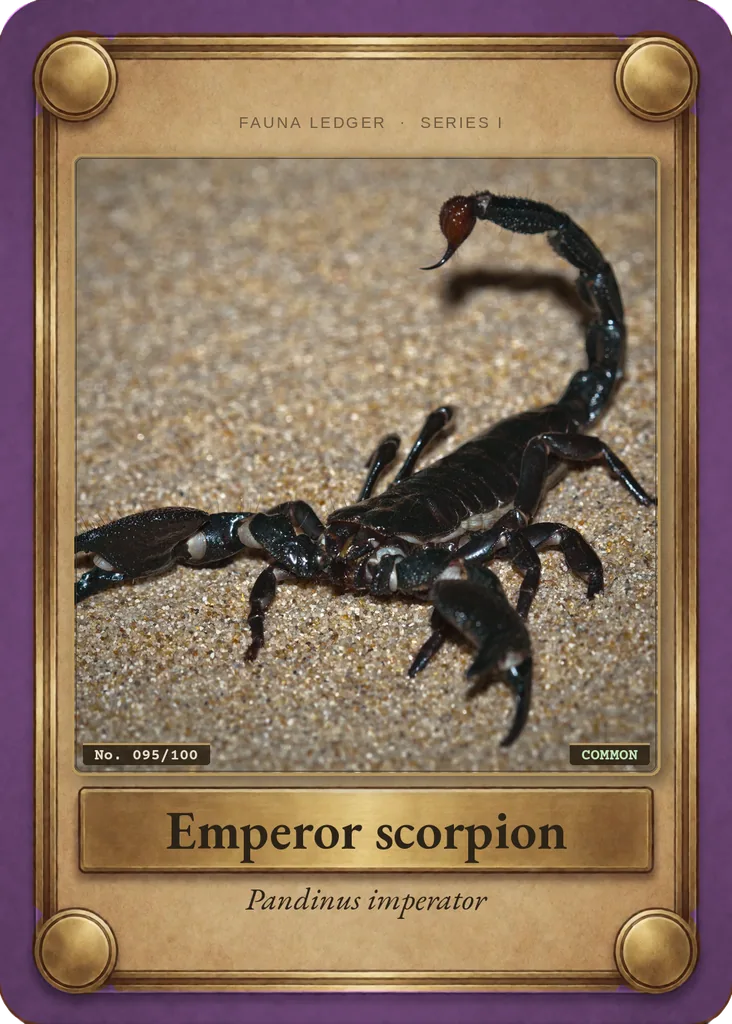
Emperor scorpion
Pandinus imperator
Common NE · Not Evaluated
Field notes
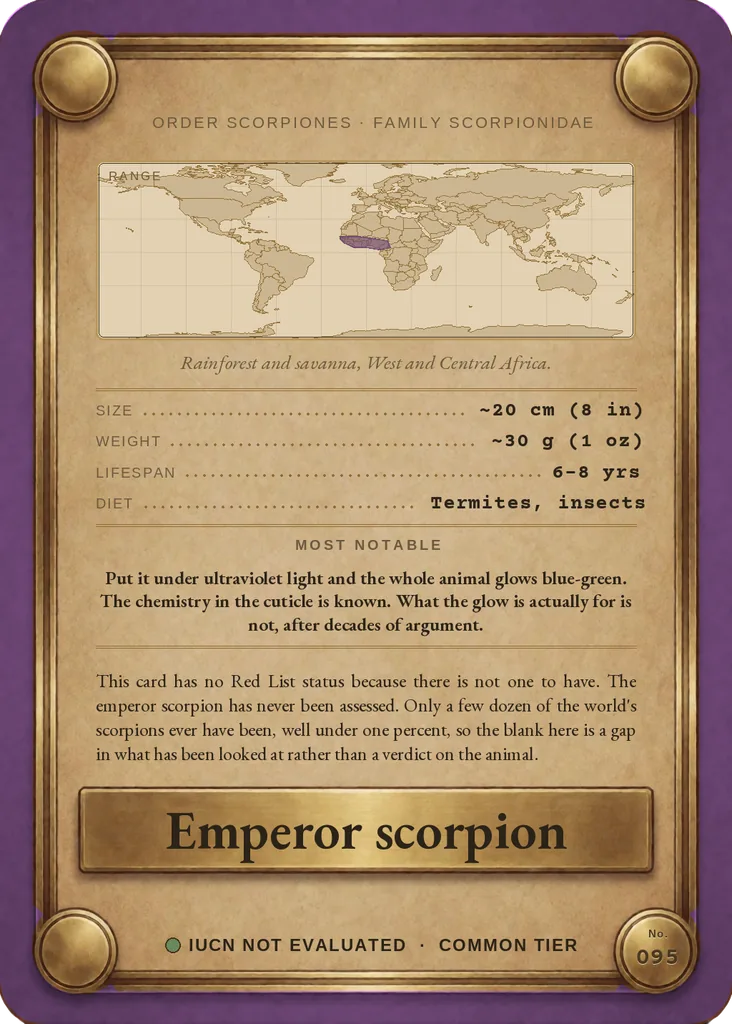
- Classification
- Order Scorpiones · Family Scorpionidae
- Range
- Rainforest and savanna of West and Central Africa
- Size
- ~20 cm (8 in)
- Weight
- ~30 g (1 oz)
- Lifespan
- 6–8 yrs
- Diet
- Termites, insects
Most Notable
Put it under ultraviolet light and the whole animal glows blue-green. The chemistry in the cuticle is known. What the glow is actually for is not, after decades of argument.
This card has no Red List status because there is not one to have. The emperor scorpion has never been assessed. Only a few dozen of the world's scorpions ever have been, well under one percent, so the blank here is a gap in what has been looked at rather than a verdict on the animal.
Unassessed does not mean unregulated. It has been on CITES Appendix II since 1995, because so many were being taken out of West Africa for the pet trade that the trade itself needed permits, and that happened without anyone ever formally judging how the wild population was doing.
It is one of the largest scorpions alive and one of the least dangerous. The venom is mild and an adult mostly does not bother using it, relying on the pincers instead, which is precisely why it became the scorpion people keep.
The mother carries her children. Young are born live and pale, and they ride on her back until their first moult, and she will defend them. Emperor scorpions are also unusually tolerant of each other and will share a burrow, which is rare in the order.
The glow does not fade quickly. It persists in preserved museum specimens decades old, and even in fossil scorpion cuticle, which is one of the reasons the chemistry was worked out long before the purpose was.
Range: Rainforest and savanna, West and Central Africa.