
Card #091 · Amphibians
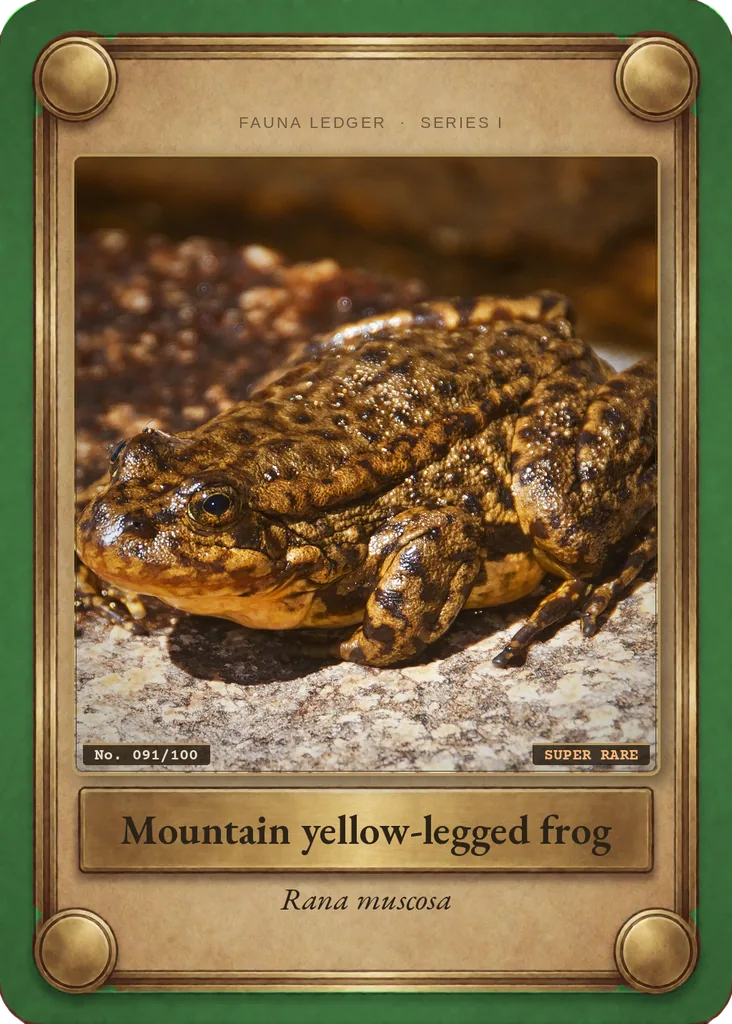
Southern mountain yellow-legged frog
Rana muscosa
Super Rare EN · Endangered
Field notes
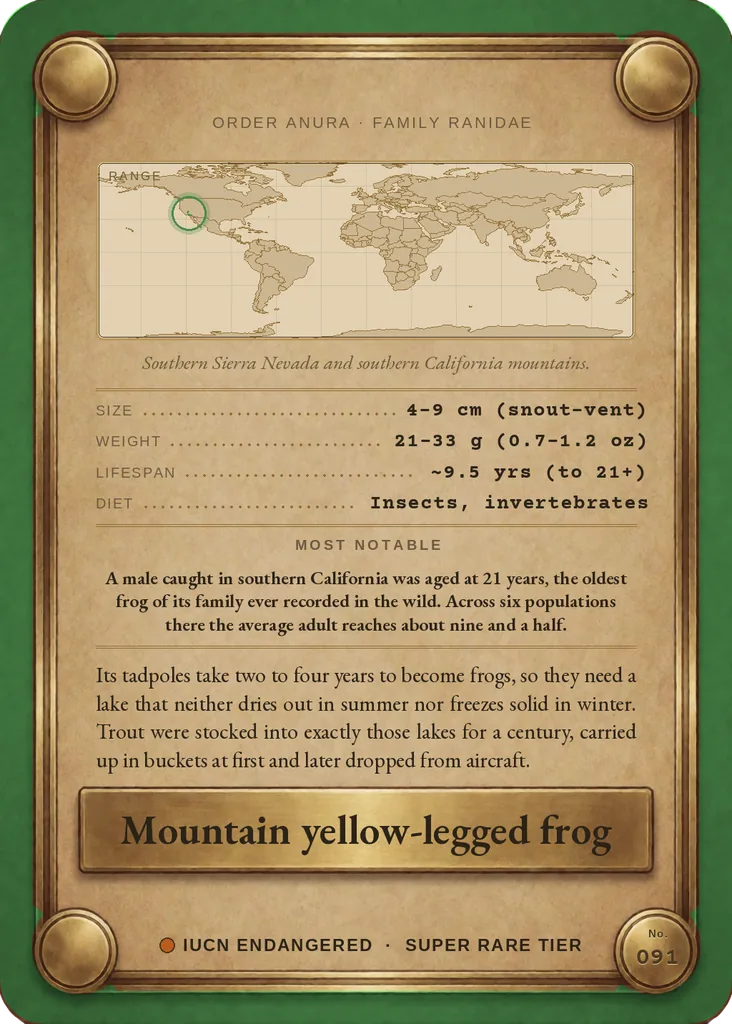
- Classification
- Order Anura · Family Ranidae
- Range
- Southern Sierra Nevada and mountains of southern California
- Size
- 4–9 cm (snout–vent)
- Weight
- 21–33 g (0.7–1.2 oz)
- Lifespan
- ~9.5 yrs (to 21+)
- Diet
- Insects, invertebrates
Most Notable
A male caught in southern California was aged at 21 years, the oldest frog of its family ever recorded in the wild. Across six populations there the average adult reaches about nine and a half.
Its tadpoles take two to four years to become frogs, so they need a lake that neither dries out in summer nor freezes solid in winter. Trout were stocked into exactly those lakes for a century, carried up in buckets at first and later dropped from aircraft.
It is gone from more than 90 percent of the range it once held. Two things did most of it: the introduced trout, which eat tadpoles, and chytrid fungus, which attacks the mouthparts of tadpoles and then the skin of adults.
There are two of these frogs, not one. Populations in the northern Sierra Nevada were split off in 2007 as a separate species, the Sierra Nevada yellow-legged frog, Rana sierrae, which the Red List rates Vulnerable rather than Endangered. This card is the southern species.
Some of them fight the fungus with their own skin bacteria. Frogs carrying Janthinobacterium lividum survive infections that kill their neighbours, and the bacterium is now being used deliberately in reintroductions.
They are being put back. More than ten thousand captive-reared frogs have been released into California streams and lakes, which is why anyone knows how long a wild one lives: the marked animals have been recaptured for decades.
Range: Southern Sierra Nevada and southern California mountains.