
Card #078 · Fish
Blacktip reef shark
Carcharhinus melanopterus
Rare VU · Vulnerable
Field notes
- Classification
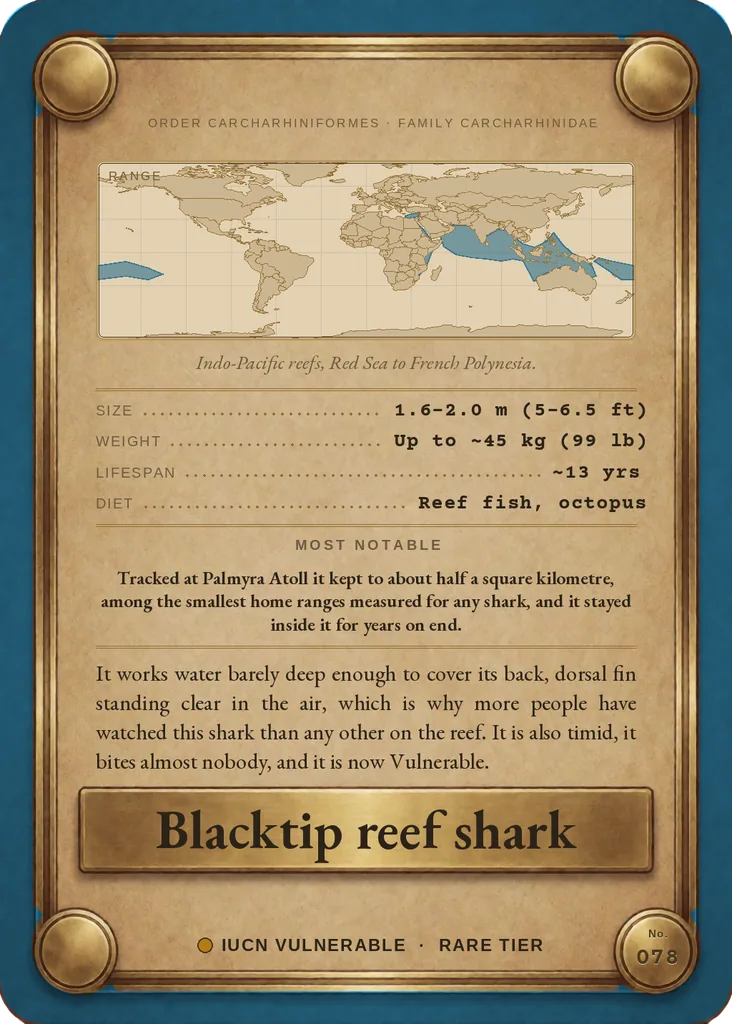
- Order Carcharhiniformes · Family Carcharhinidae
- Range
- Indo-Pacific coral reefs
- Size
- 1.6–2.0 m (5–6.5 ft)
- Weight
- Up to ~45 kg (99 lb)
- Lifespan
- ~13 yrs
- Diet
- Reef fish, octopus
Most Notable
Tracked at Palmyra Atoll it kept to about half a square kilometre, among the smallest home ranges measured for any shark, and it stayed inside it for years on end.
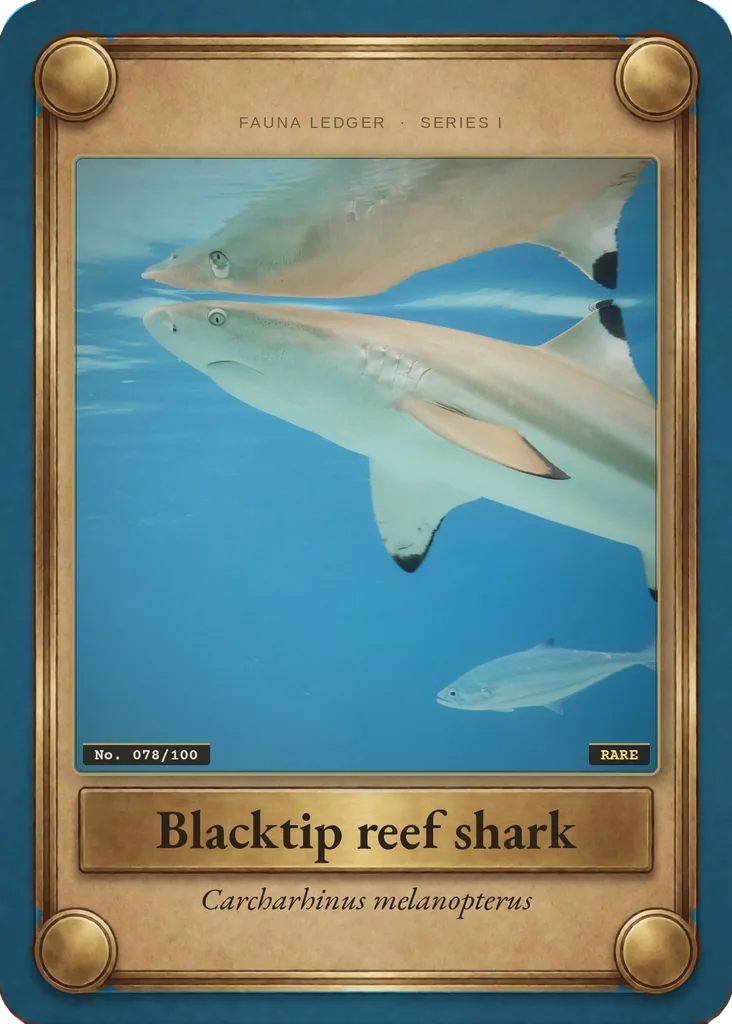
It works water barely deep enough to cover its back, dorsal fin standing clear in the air, which is why more people have watched this shark than any other on the reef. It is also timid, it bites almost nobody, and it is now Vulnerable.
Staying put is the problem. A shark that holds half a square kilometre for years cannot walk away from a reef that gets fished out, and it is taken across most of its range for fins, meat, skin, teeth and liver.
Its habitat is in trouble independently of the fishing. Warming, blast and poison fishing and poor water quality are all degrading the reefs themselves, so the animal is being squeezed from two directions at once.
Fourteen. That is the total number of unprovoked bites on record as of 2025, almost all of them a wader's legs mistaken for prey in cloudy shallow water by a shark that flees from divers.
They herd. Groups have been watched driving schools of mullet against the shore and feeding on the fish pinned there, which is a good deal more organised than this shark's reputation suggests.
It has let itself into the Mediterranean. Blacktip reef sharks have come up through the Suez Canal into the eastern Mediterranean, one of a long list of Red Sea species that have made the same trip.
Range: Indo-Pacific reefs, Red Sea to French Polynesia.