
Card #069 · Reptiles
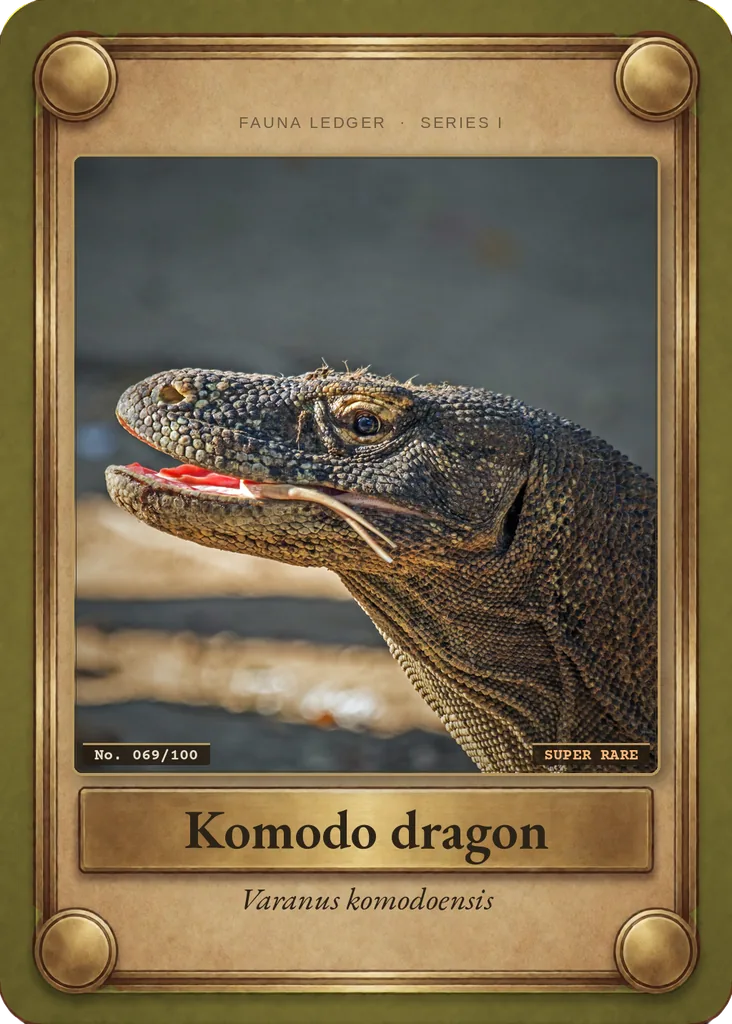
Komodo dragon
Varanus komodoensis
Super Rare EN · Endangered
Field notes
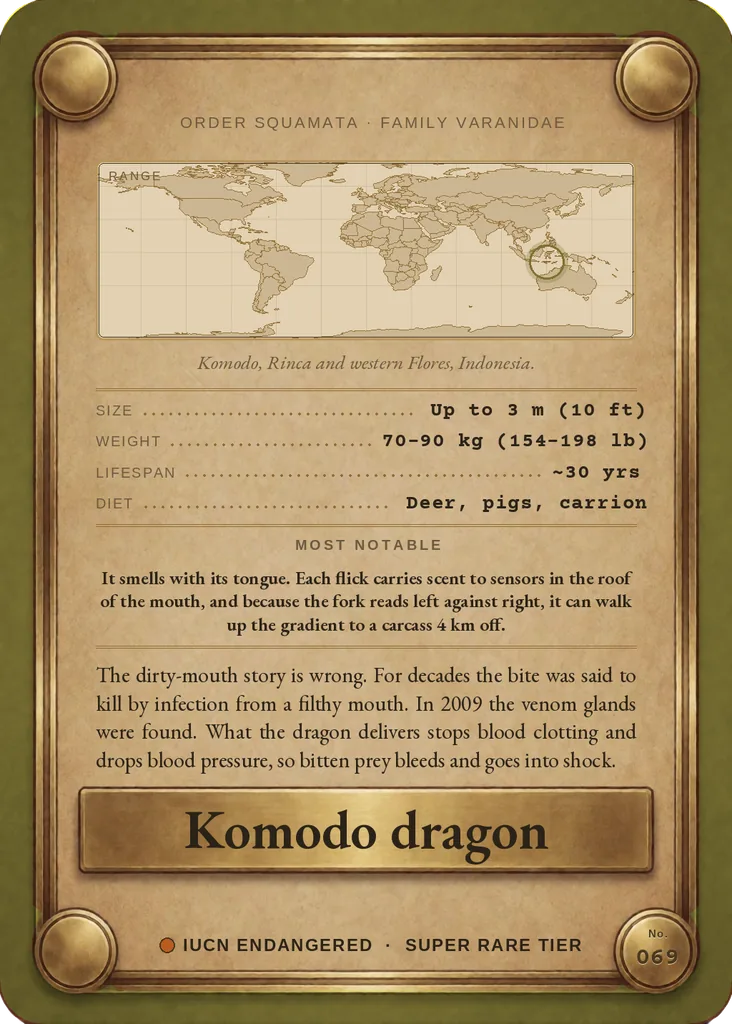
- Classification
- Order Squamata · Family Varanidae
- Range
- Komodo, Rinca and western Flores, Indonesia
- Size
- Up to 3 m (10 ft)
- Weight
- 70–90 kg (154–198 lb)
- Lifespan
- ~30 yrs
- Diet
- Deer, pigs, carrion
Most Notable
It smells with its tongue. Each flick carries scent to sensors in the roof of the mouth, and because the fork reads left against right, it can walk up the gradient to a carcass 4 km off.
The dirty-mouth story is wrong. For decades the bite was said to kill by infection from a filthy mouth. In 2009 the venom glands were found. What the dragon delivers stops blood clotting and drops blood pressure, so bitten prey bleeds and goes into shock.
There are fewer than 1,400 breeding adults left, spread over eight populations, and none of those populations holds more than 500 animals. It was moved to Endangered in 2021, and what moved it was the sea: much of its habitat is low coastal ground.
Females can breed without a male. Parthenogenesis has been recorded in captivity more than once, and because of how lizard sex chromosomes work every hatchling from a virgin birth is male.
Young dragons live in the trees, and it is not for the view. Adults will eat them, so hatchlings go straight up after leaving the nest and stay arboreal for the first years, sometimes rolling in droppings to smell inedible.
The teeth are the other half of the weapon: curved, serrated and hidden in the gum tissue, and a bite is a pulling slash rather than a clamp, which opens the wound the venom then keeps open.
Range: Komodo, Rinca and western Flores, Indonesia.