
Card #061 · Reptiles
Hermann's tortoise
Testudo hermanni
Uncommon NT · Near Threatened
Field notes
- Classification
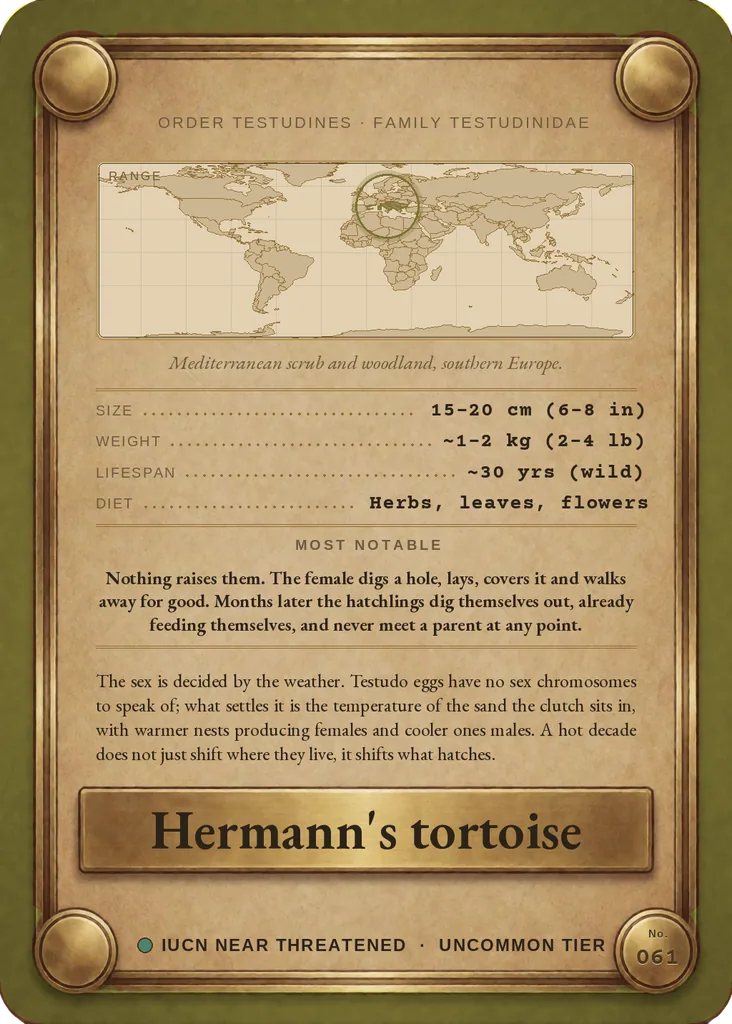
- Order Testudines · Family Testudinidae
- Range
- Southern Europe
- Size
- 15–20 cm (6–8 in)
- Weight
- ~1–2 kg (2–4 lb)
- Lifespan
- ~30 yrs (wild)
- Diet
- Herbs, leaves, flowers
Most Notable
Nothing raises them. The female digs a hole, lays, covers it and walks away for good. Months later the hatchlings dig themselves out, already feeding themselves, and never meet a parent at any point.
The sex is decided by the weather. Testudo eggs have no sex chromosomes to speak of; what settles it is the temperature of the sand the clutch sits in, with warmer nests producing females and cooler ones males. A hot decade does not just shift where they live, it shifts what hatches.
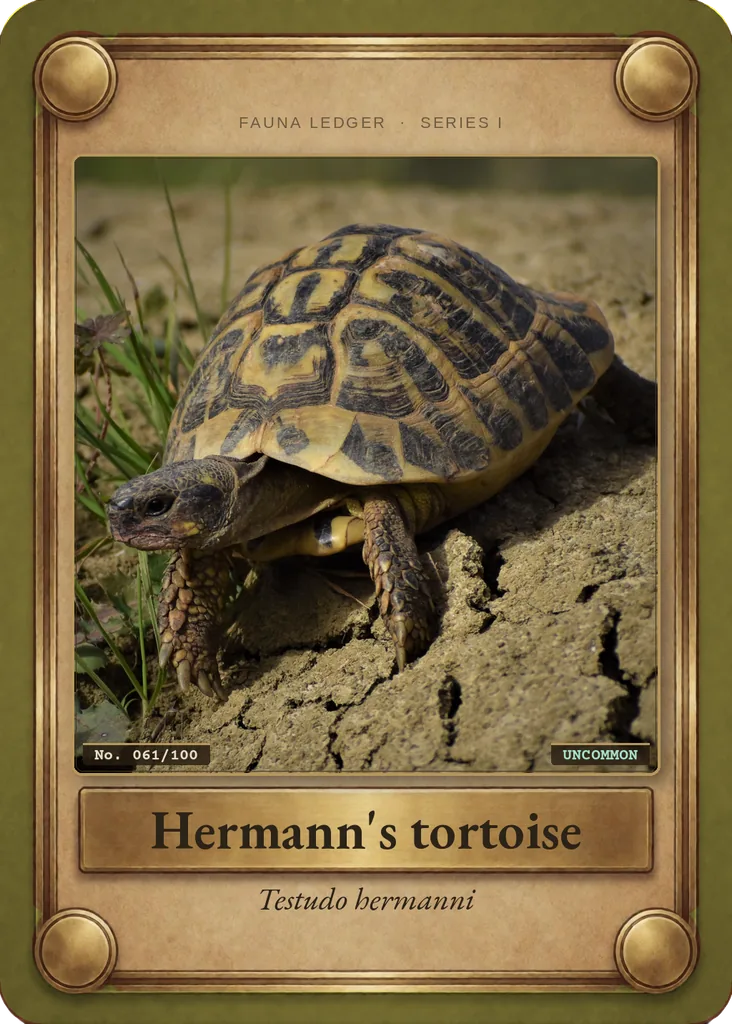
The Near Threatened badge covers the species as a whole and hides an uneven picture. The western form, Testudo hermanni hermanni, of Spain, southern France and Italy, is assessed Endangered. The eastern form in the Balkans, which is the animal in this photograph, is the one still doing reasonably well.
They do not live for a century, whatever the folklore says. About thirty years is normal in the wild. Well kept captives reach fifty to seventy and a few have passed ninety, which is a long life by any measure and still not the number people repeat.
Fire is the thing that kills them. A tortoise in Mediterranean scrub cannot outrun a summer burn, and repeated fires through the same maquis have emptied out populations that habitat loss alone would not have.
Males have the longer, thicker tail, and the horny spur at the tip of it is where the species gets one of its other names, the spur-tailed tortoise.
Range: Mediterranean scrub and woodland, southern Europe.