
Card #057 · Reptiles
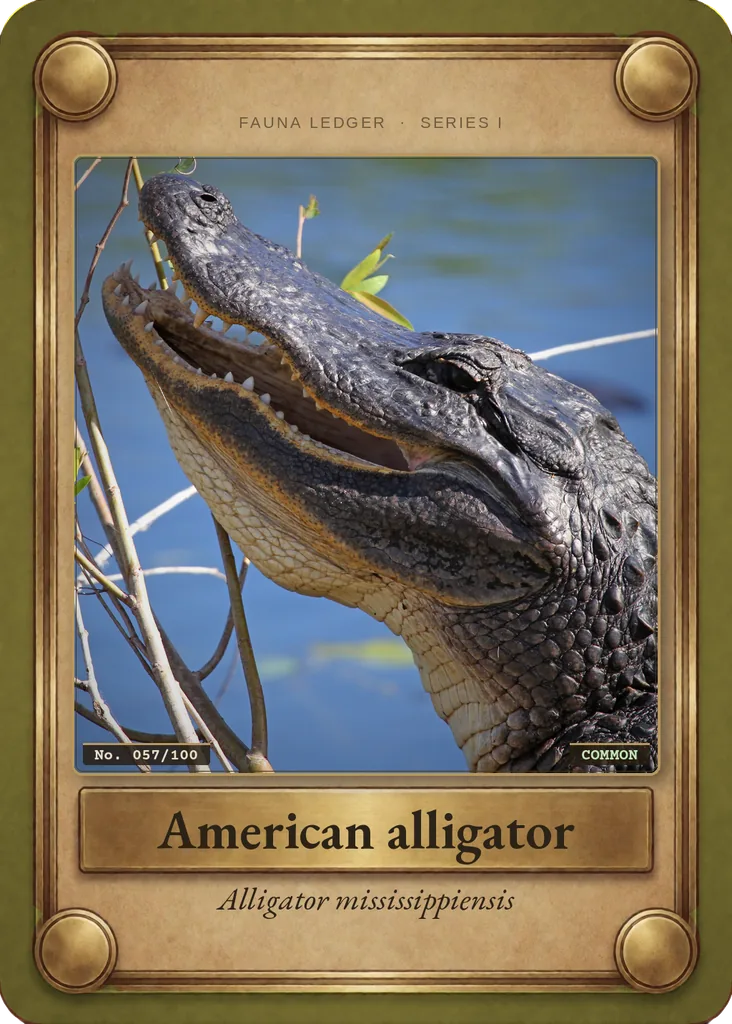
American alligator
Alligator mississippiensis
Common LC · Least Concern
Field notes
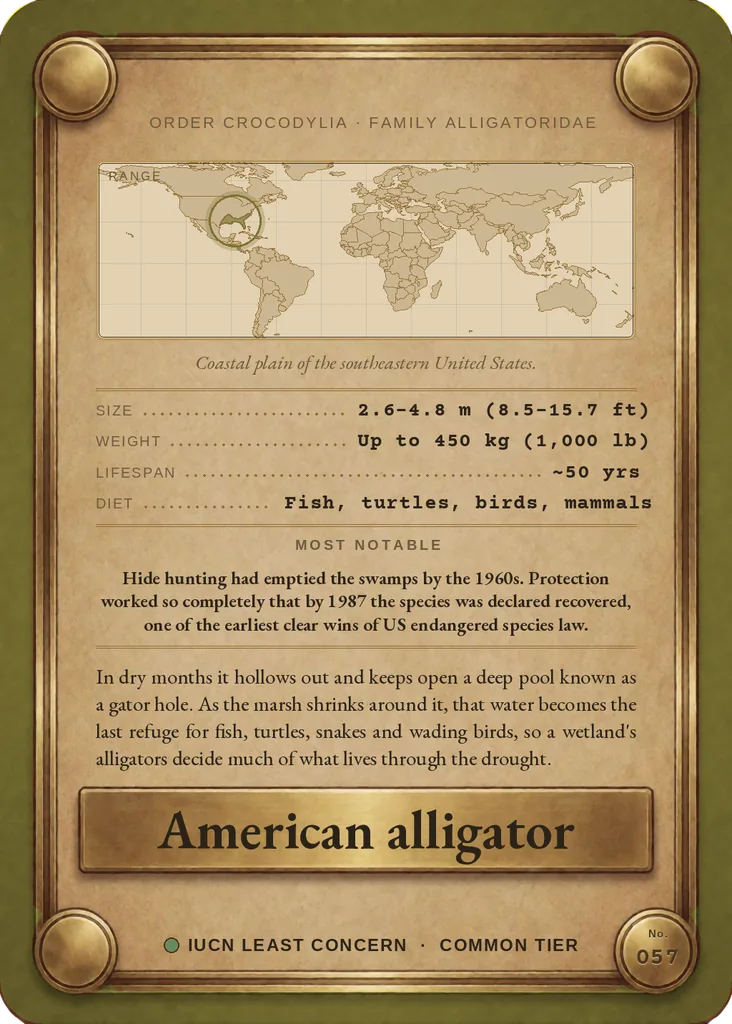
- Classification
- Order Crocodylia · Family Alligatoridae
- Range
- Southeastern United States
- Size
- 2.6–4.8 m (8.5–15.7 ft)
- Weight
- Up to 450 kg (1,000 lb)
- Lifespan
- ~50 yrs
- Diet
- Fish, turtles, birds, mammals
Most Notable
Hide hunting had emptied the swamps by the 1960s. Protection worked so completely that by 1987 the species was declared recovered, one of the earliest clear wins of US endangered species law.
In dry months it hollows out and keeps open a deep pool known as a gator hole. As the marsh shrinks around it, that water becomes the last refuge for fish, turtles, snakes and wading birds, so a wetland's alligators decide much of what lives through the drought.
It is still listed under the Endangered Species Act, but as threatened due to similarity of appearance: an alligator hide is hard to tell from an endangered crocodile or caiman hide, so the listing keeps that trade regulated and identifiable.
Nest temperature, not chromosomes, decides sex. Eggs held around 31 to 33 C produce males, while cooler or hotter nests produce females.
The mother guards the nest through roughly 65 days of incubation, carries the hatchlings to the water in her mouth, and may stay with the young for up to three years, which is rare among reptiles.
Range: Coastal plain of the southeastern United States.