
Card #045 · Birds
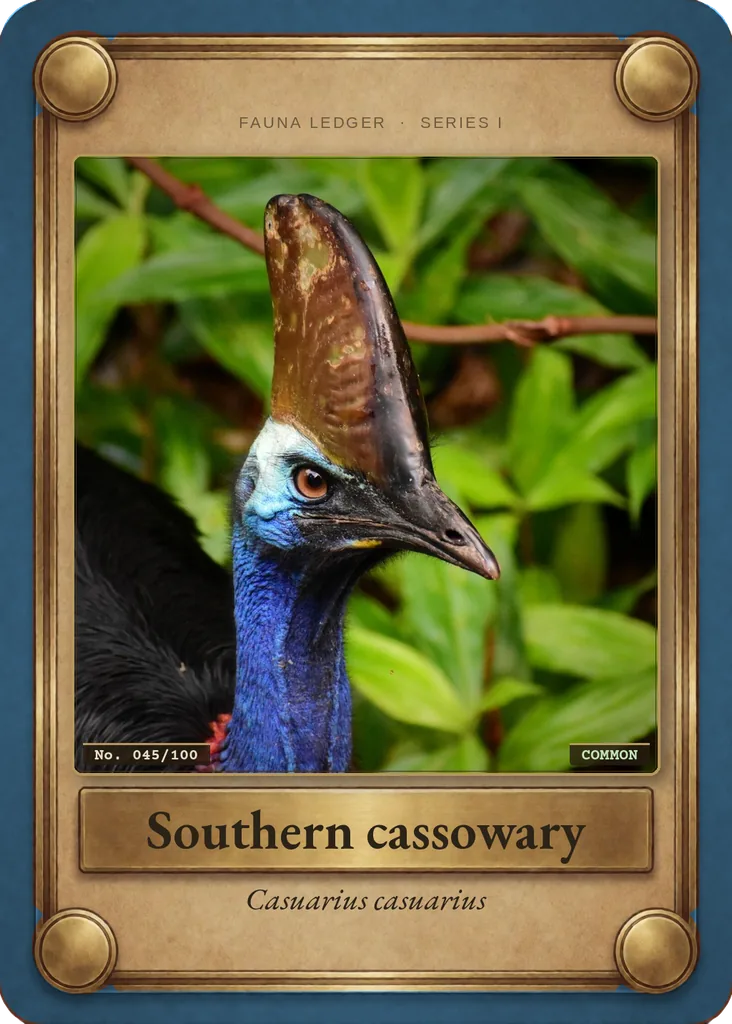
Southern cassowary
Casuarius casuarius
Common LC · Least Concern
Field notes
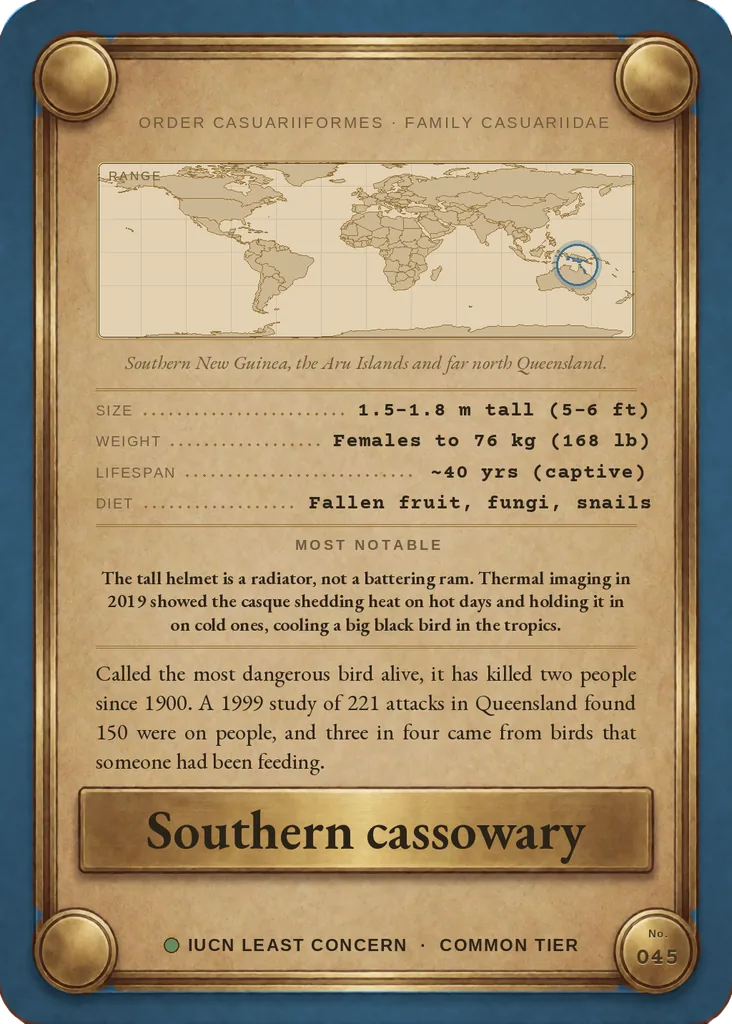
- Classification
- Order Casuariiformes · Family Casuariidae
- Range
- Southern New Guinea, the Aru Islands and northeast Queensland
- Size
- 1.5–1.8 m tall (5–6 ft)
- Weight
- Females to 76 kg (168 lb)
- Lifespan
- ~40 yrs (captive)
- Diet
- Fallen fruit, fungi, snails
Most Notable
The tall helmet is a radiator, not a battering ram. Thermal imaging in 2019 showed the casque shedding heat on hot days and holding it in on cold ones, cooling a big black bird in the tropics.
Called the most dangerous bird alive, it has killed two people since 1900. A 1999 study of 221 attacks in Queensland found 150 were on people, and three in four came from birds that someone had been feeding.
Least Concern is the global status, and most southern cassowaries live in New Guinea. In Australia the population of about 1,500 to 2,500 birds is listed Endangered under the federal EPBC Act, and road strikes and dog attacks are its biggest threats.
The inner claw on each foot grows to about 12 cm, and a kick is how a cassowary defends itself. Most recorded attacks were a bird chasing or kicking at someone it expected food from, which is why feeding them is illegal in Queensland.
It is a rainforest gardener. Cassowaries eat the fruit of more than 200 plant species and are among the very few animals in Australian rainforest big enough to swallow the largest fruits whole and carry the seeds far from the parent tree.
The father does all the parenting. The male incubates three to five green eggs for about 50 days and then raises the striped chicks alone for around nine months.
This map shows the native range. Cassowaries also live on the Indonesian island of Seram, but that population is thought to have been brought there by people and is not drawn here.
Range: Southern New Guinea, the Aru Islands and far north Queensland.