
Card #035 · Birds
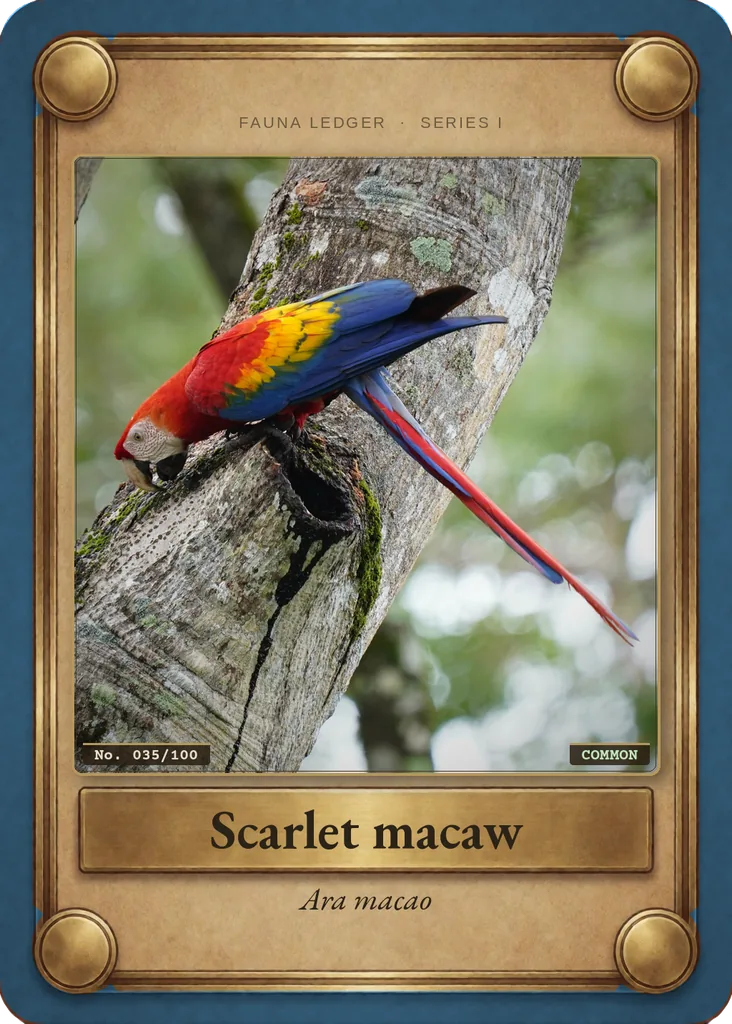
Scarlet macaw
Ara macao
Common LC · Least Concern
Field notes
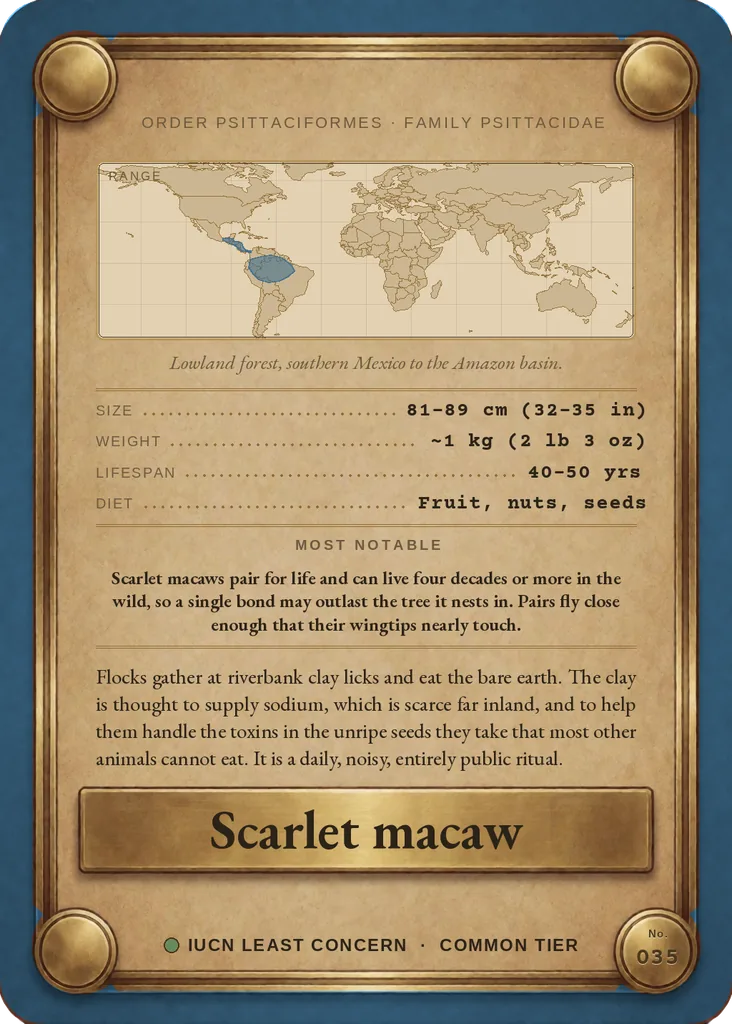
- Classification
- Order Psittaciformes · Family Psittacidae
- Range
- Central & South America
- Size
- 81–89 cm (32–35 in)
- Weight
- ~1 kg (2 lb 3 oz)
- Lifespan
- 40–50 yrs
- Diet
- Fruit, nuts, seeds
Most Notable
Scarlet macaws pair for life and can live four decades or more in the wild, so a single bond may outlast the tree it nests in. Pairs fly close enough that their wingtips nearly touch.
Flocks gather at riverbank clay licks and eat the bare earth. The clay is thought to supply sodium, which is scarce far inland, and to help them handle the toxins in the unripe seeds they take that most other animals cannot eat. It is a daily, noisy, entirely public ritual.
Nestlings are fed on seeds of Cnidoscolus and Schizolobium, their main protein source, and in Costa Rica the birds have adapted to feed on introduced teak and beach almond as well.
In captivity they may reach 75 to 90 years, though 40 to 50 is more typical, which is why macaws are among the few pets that routinely outlive their owners.
Listed as Least Concern globally, but the species is on CITES Appendix I and the northern subspecies is endangered, the global figure hiding steep regional losses to trapping and forest clearance.
Range: Lowland forest, southern Mexico to the Amazon basin.