
Card #021 · Mammals
Walrus
Odobenus rosmarus
Rare VU · Vulnerable
Field notes
- Classification
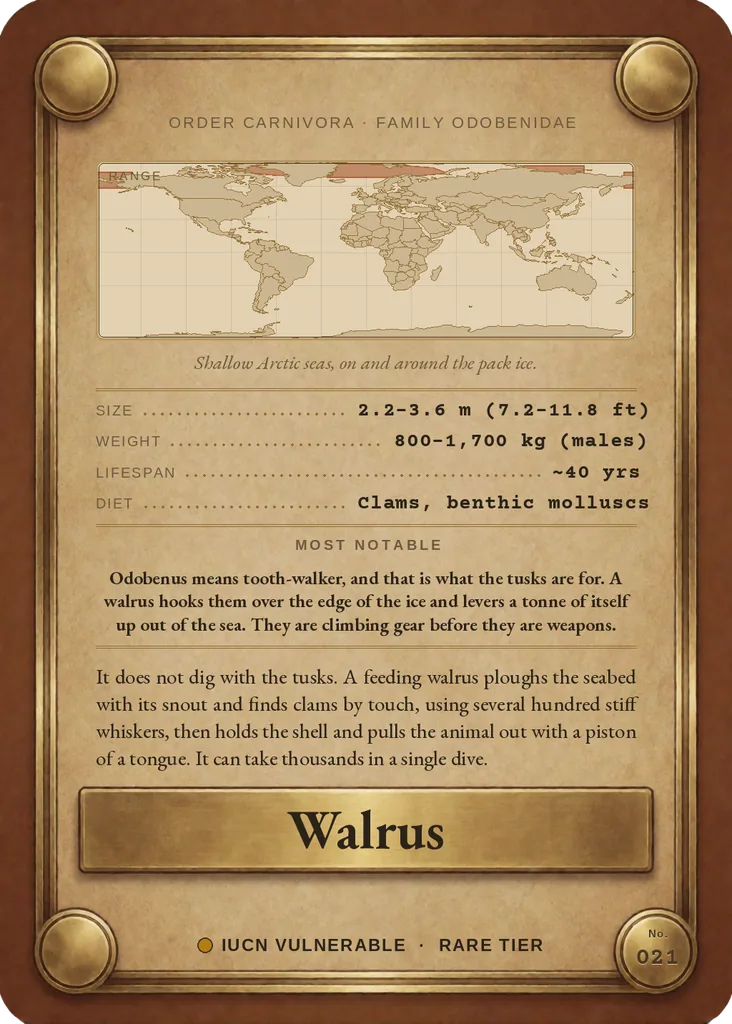
- Order Carnivora · Family Odobenidae
- Range
- Shallow seas of the Arctic
- Size
- 2.2–3.6 m (7.2–11.8 ft)
- Weight
- 800–1,700 kg (males)
- Lifespan
- ~40 yrs
- Diet
- Clams, benthic molluscs
Most Notable
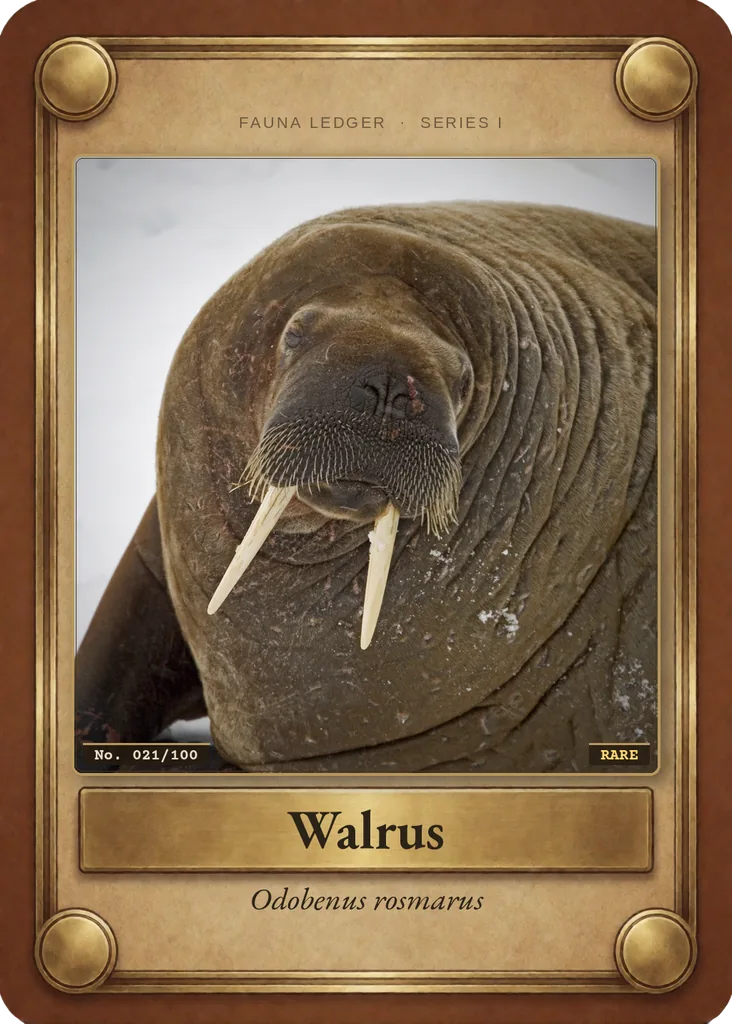
Odobenus means tooth-walker, and that is what the tusks are for. A walrus hooks them over the edge of the ice and levers a tonne of itself up out of the sea. They are climbing gear before they are weapons.
It does not dig with the tusks. A feeding walrus ploughs the seabed with its snout and finds clams by touch, using several hundred stiff whiskers, then holds the shell and pulls the animal out with a piston of a tongue. It can take thousands in a single dive.
The listing is about ice, not hunting. Walruses feed on the shallow shelf and rest on ice floating above it. When the summer ice retreats past the shelf edge into water too deep to reach the bottom, they have to come ashore instead.
Those land haul-outs run to tens of thousands of animals packed together, and that is the danger. A startled herd stampedes for the water, and calves are crushed. Deaths at land haul-outs are now a recognised cause of loss.
Tusks are teeth: enlarged upper canines that keep growing for most of the animal's life and reach about a metre. Both sexes carry them, and the size of a bull's tusks settles most disputes before they turn into fights.
The skin over the neck of an old bull can be several centimetres thick and heavily knobbled with tubercles, which is armour in the literal sense, since the fighting is done with metre-long teeth.
Range: Shallow Arctic seas, on and around the pack ice.