
Card #009 · Mammals
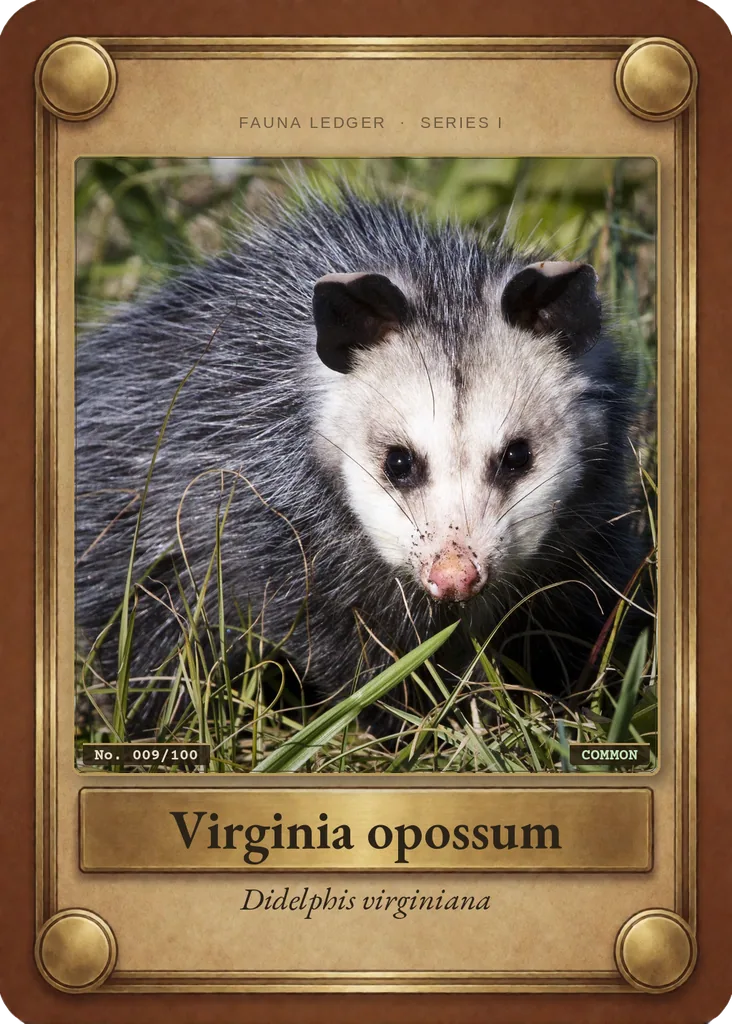
Virginia opossum
Didelphis virginiana
Common LC · Least Concern
Field notes
- Classification
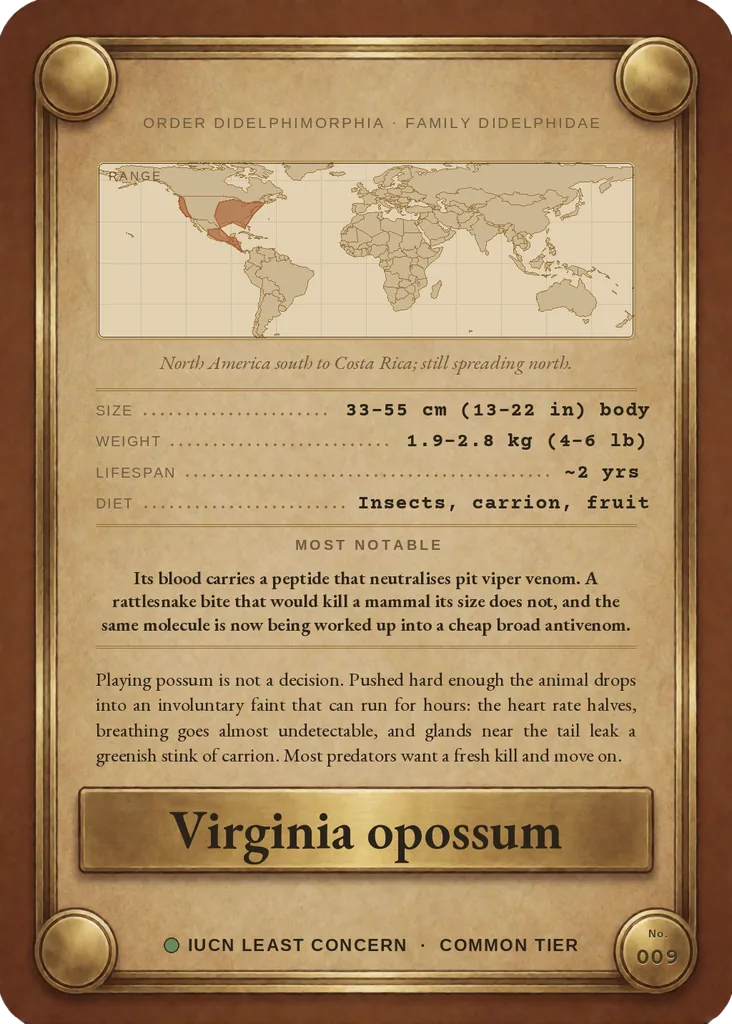
- Order Didelphimorphia · Family Didelphidae
- Range
- North and Central America
- Size
- 33–55 cm (13–22 in) body
- Weight
- 1.9–2.8 kg (4–6 lb)
- Lifespan
- ~2 yrs
- Diet
- Insects, carrion, fruit
Most Notable
Its blood carries a peptide that neutralises pit viper venom. A rattlesnake bite that would kill a mammal its size does not, and the same molecule is now being worked up into a cheap broad antivenom.
Playing possum is not a decision. Pushed hard enough the animal drops into an involuntary faint that can run for hours: the heart rate halves, breathing goes almost undetectable, and glands near the tail leak a greenish stink of carrion. Most predators want a fresh kill and move on.
Fifty teeth, more than any other land mammal in North America, and ten incisors in the upper jaw alone.
Gestation runs 11 to 13 days. The young are born about the size of a bee, crawl to the pouch, and spend another two and a half months there before riding on their mother's back.
The tail is prehensile and grips branches and bundles of nest material, but a grown opossum is far too heavy to hang from it. That image comes from young animals and from cartoons.
It has been moving north since about 1900 and now turns up in New England, Michigan, Wisconsin and Minnesota, where frostbitten ear tips and tail tips are common.
Range: North America south to Costa Rica; still spreading north.