
Card #005 · Mammals
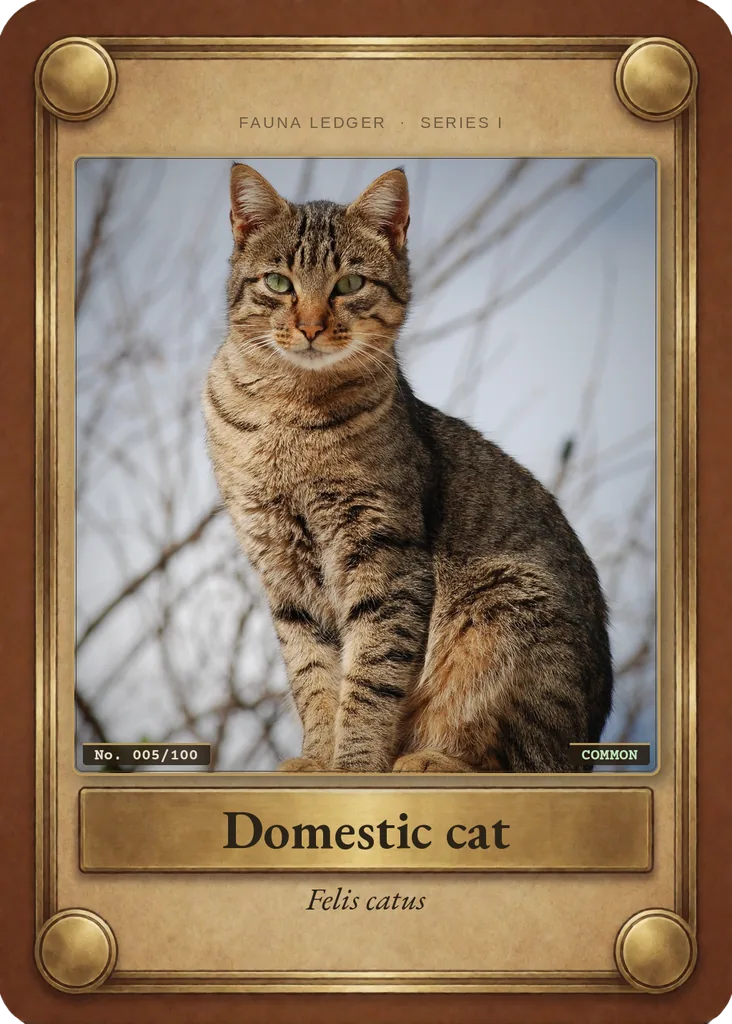
Domestic cat (house cat)
Felis catus
Common LC · Least Concern
Field notes
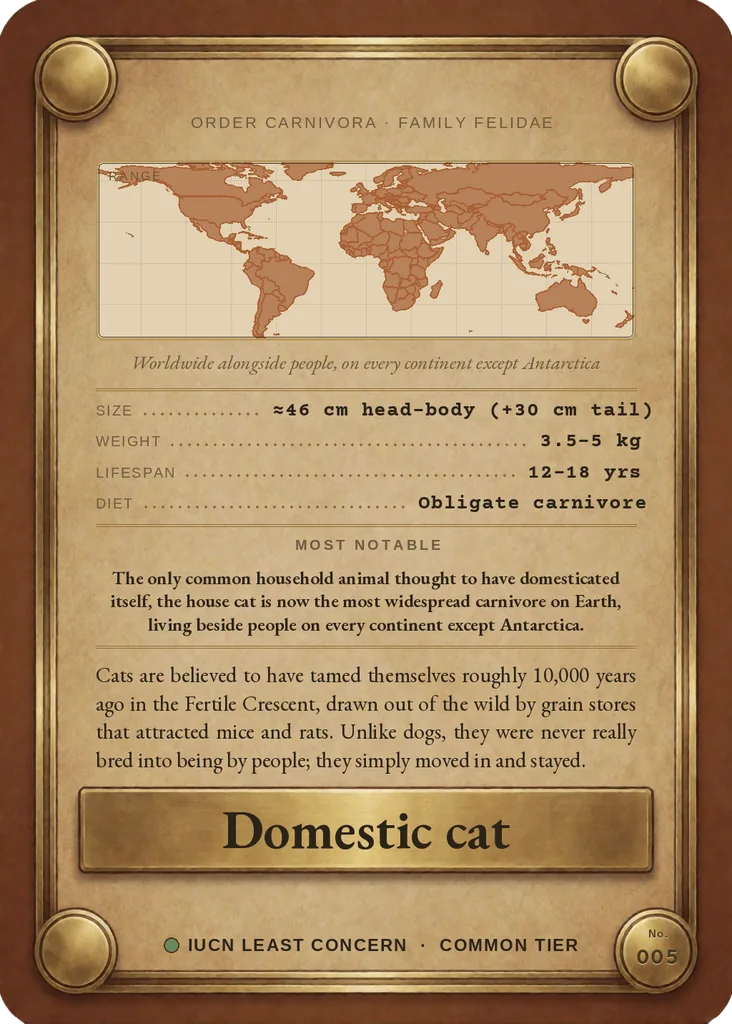
- Classification
- Order Carnivora · Family Felidae
- Range
- Worldwide (domesticated)
- Size
- ≈46 cm head-body (+30 cm tail)
- Weight
- 3.5–5 kg
- Lifespan
- 12–18 yrs
- Diet
- Obligate carnivore
Most Notable
The only common household animal thought to have domesticated itself, the house cat is now the most widespread carnivore on Earth, living beside people on every continent except Antarctica.
Cats are believed to have tamed themselves roughly 10,000 years ago in the Fertile Crescent, drawn out of the wild by grain stores that attracted mice and rats. Unlike dogs, they were never really bred into being by people; they simply moved in and stayed.
A house cat shares close to 96 percent of its DNA with the tiger and keeps the full predator toolkit: retractable claws, night vision, and whiskers that read the faintest currents of air.
Cats cannot taste sweetness. As obligate carnivores they carry a broken sweet-taste gene, so a life built entirely around meat left them with no use for it.
A cat's purr sits around 25 to 150 hertz, a range some researchers link to tissue and bone repair, which may be why cats purr when hurt as well as when content.
With well over 600 million kept worldwide, Felis catus is among the most numerous carnivores alive, so common that it is easy to forget it is a small, superbly equipped predator that simply chose to move in with us.
Range: Worldwide alongside people, on every continent except Antarctica