
Card #004 · Mammals
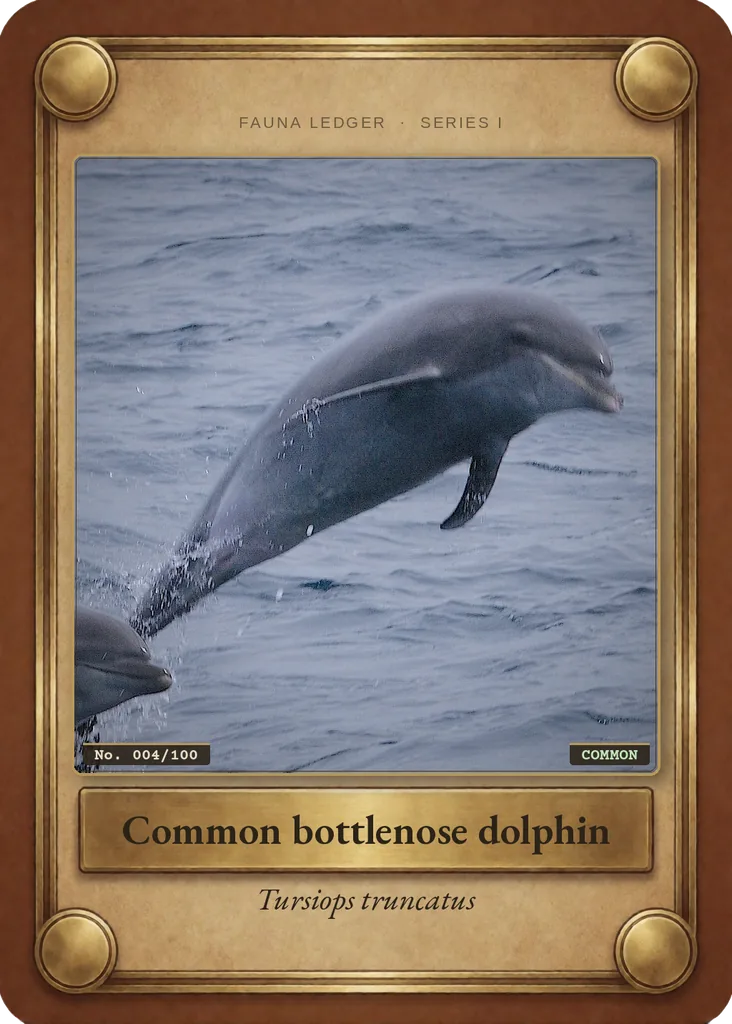
Common bottlenose dolphin
Tursiops truncatus
Common LC · Least Concern
Field notes
- Classification
- Order Cetacea · Family Delphinidae
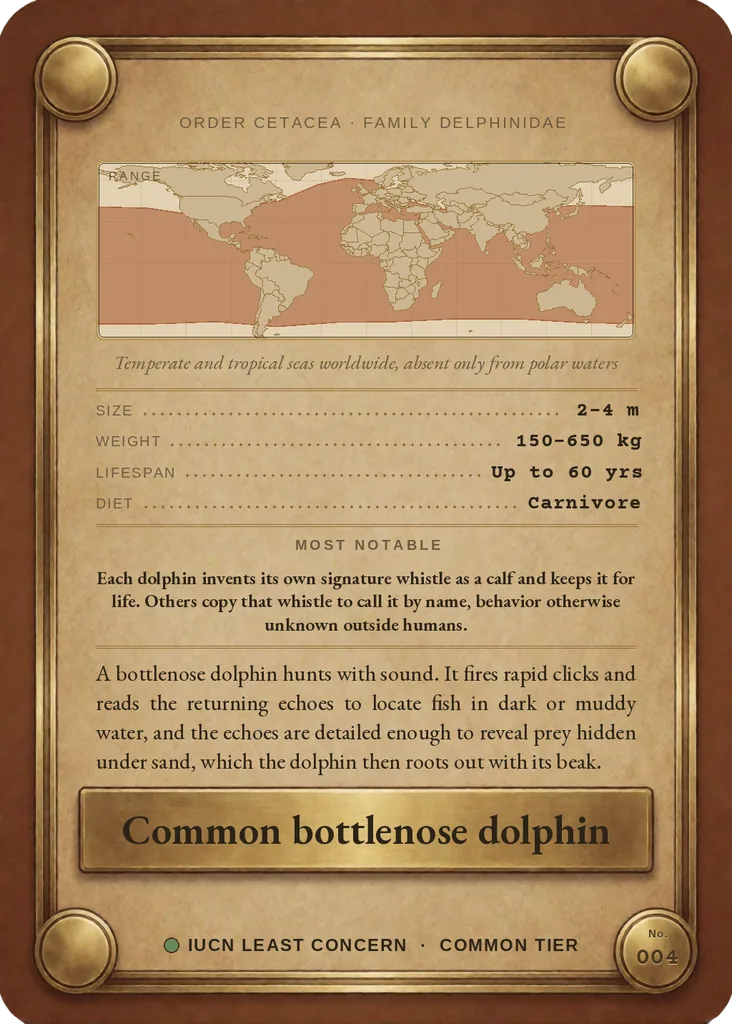
- Range
- Temperate & tropical oceans worldwide
- Size
- 2–4 m
- Weight
- 150–650 kg
- Lifespan
- Up to 60 yrs
- Diet
- Carnivore
Most Notable
Each dolphin invents its own signature whistle as a calf and keeps it for life. Others copy that whistle to call it by name, behavior otherwise unknown outside humans.
A bottlenose dolphin hunts with sound. It fires rapid clicks and reads the returning echoes to locate fish in dark or muddy water, and the echoes are detailed enough to reveal prey hidden under sand, which the dolphin then roots out with its beak.
Dolphins are not fish but warm-blooded mammals that breathe air, and their closest living relatives are hippos. Their ancestors walked on land roughly 50 million years ago before returning to the sea.
Bottlenose dolphins are among the very few animals that recognize themselves in a mirror, and some are toolmakers: dolphins in Shark Bay, Australia carry sea sponges on their beaks to shield them while foraging on the rough seafloor, a trick mothers teach their daughters.
A dolphin never fully sleeps. It rests one half of its brain at a time and keeps the other half awake to surface and breathe, so it is in effect always half awake.
The species as a whole is secure, but some local populations are not. The Black Sea subspecies is listed as Endangered after decades of hunting, bycatch, and pollution, a reminder that a global Least Concern can hide real regional loss.
Range: Temperate and tropical seas worldwide, absent only from polar waters