
Card #003 · Mammals
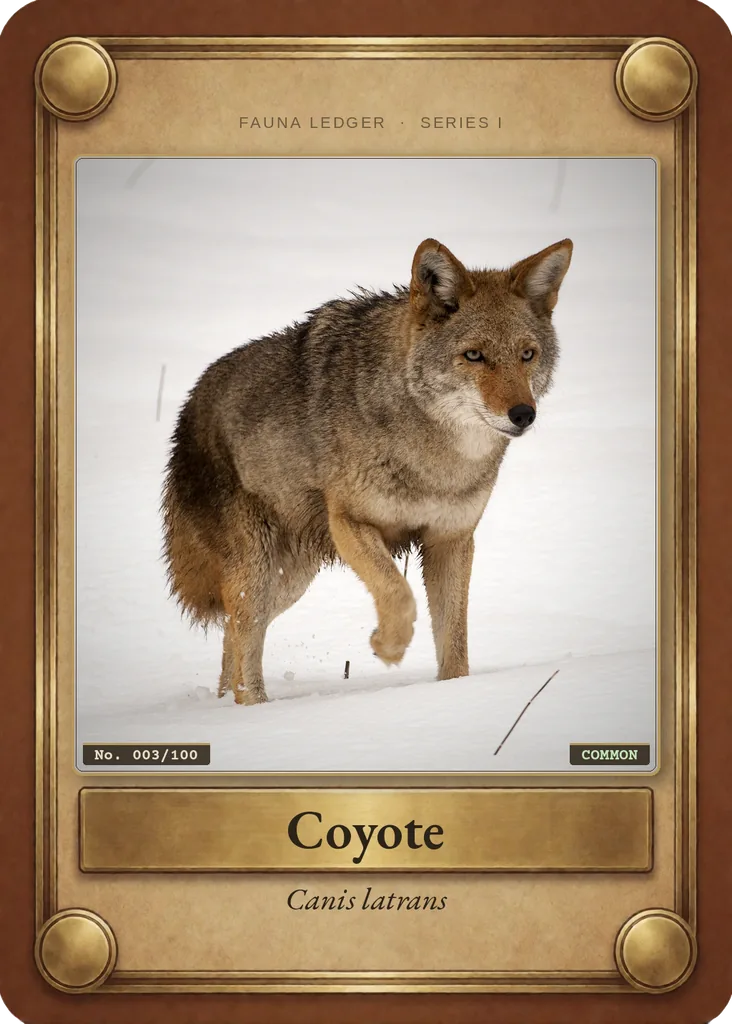
Coyote
Canis latrans
Common LC · Least Concern
Field notes
- Classification
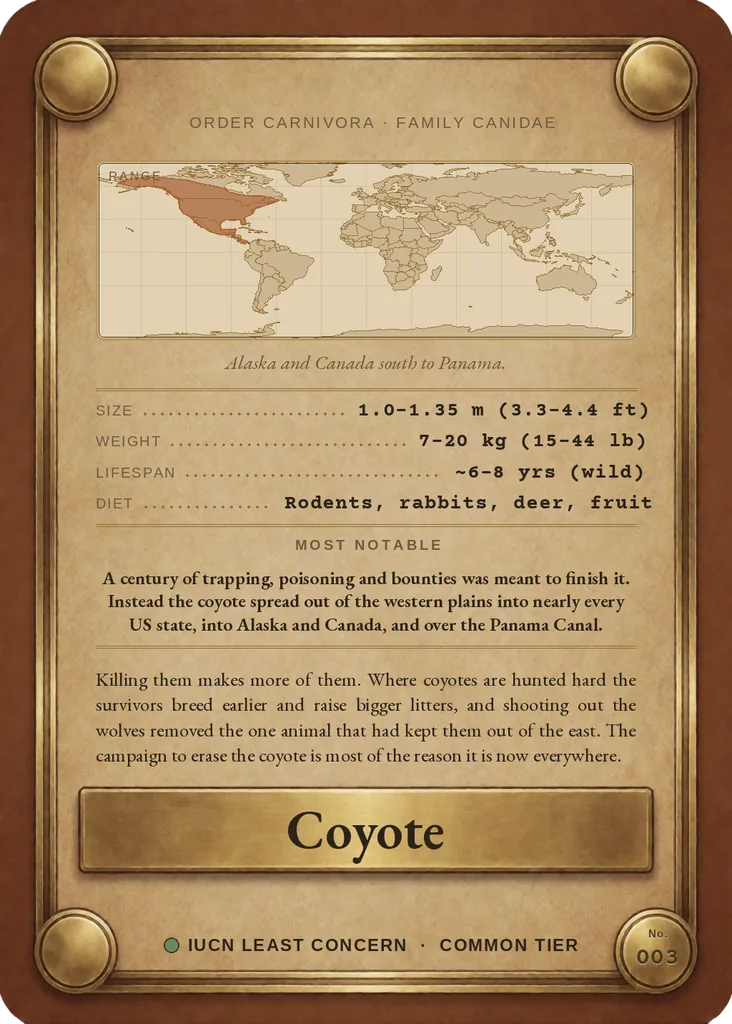
- Order Carnivora · Family Canidae
- Range
- North and Central America
- Size
- 1.0–1.35 m (3.3–4.4 ft)
- Weight
- 7–20 kg (15–44 lb)
- Lifespan
- ~6–8 yrs (wild)
- Diet
- Rodents, rabbits, deer, fruit
Most Notable
A century of trapping, poisoning and bounties was meant to finish it. Instead the coyote spread out of the western plains into nearly every US state, into Alaska and Canada, and over the Panama Canal.
Killing them makes more of them. Where coyotes are hunted hard the survivors breed earlier and raise bigger litters, and shooting out the wolves removed the one animal that had kept them out of the east. The campaign to erase the coyote is most of the reason it is now everywhere.
Canis latrans means barking dog, and it is the loudest thing about them. Coyotes rapidly switch pitch and rhythm inside a single chorus, so a pair can sound like eight animals. Playback studies found listeners overestimate the number by about double. The illusion has a name, the beau geste effect.
The eastern coyote is not purely coyote. Animals moving east through the Great Lakes interbred with eastern wolves, and the result is heavier and bigger headed than the western animal, which is part of why it took to hunting deer.
There are roughly 4,000 of them living in the Chicago metropolitan area. Urban coyotes den in cemeteries, golf courses and industrial verges, keep mostly to the night, and are usually noticed only when a resident sees one crossing a road at 3 am.
In 2013 a coyote was recorded east of the Panama Canal for the first time. Nothing now stands between the species and South America, a continent it has never occupied.
Range: Alaska and Canada south to Panama.